

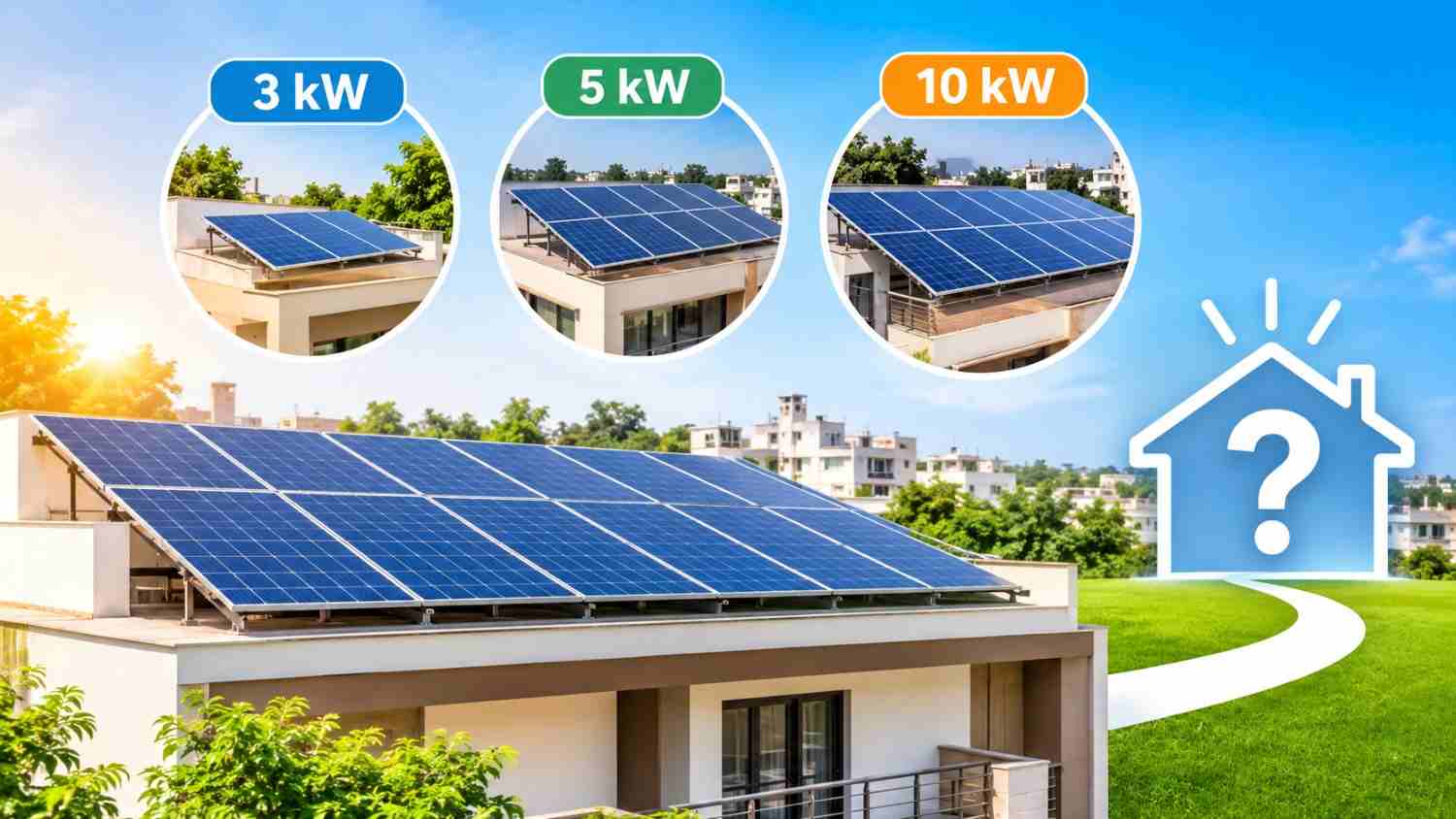
3kW, 5kW or 10kW Solar System: Which Rooftop Solar Setup Is Best for Your Home?
Installing rooftop solar is a smart way to reduce electricity bills and make your home more energy-efficient. However, choosing the right solar capacity can be confusing, especially when you have options like 3kW, 5kW, and 10kW solar systems. The right choice depends on your monthly electricity consumption, available rooftop space, budget, and the number of electrical appliances you use.
Before investing in solar panels, it is important to understand how different system capacities perform and which one can meet your household's energy requirements. In this guide, we will compare the 3kW vs 5kW vs 10kW Solar System options to help you make an informed decision for your home.
Understanding Different Rooftop Solar System Capacities
A rooftop solar system utilizes the energy of sunlight to produce electricity via solar panels installed on the roof. The size of the rooftop solar system is measured in kilowatts (kW) and represents its capacity.
More power can be generated by a bigger system, but that doesn't imply that all homes should have an expensive system installed. Knowing how much energy you consume per day is the first thing to do when choosing a good system.
3kW vs 5kW vs 10kW Solar System: Which One Should You Choose?
Let's understand how these three solar capacities differ in terms of household usage, electricity generation, and suitability.
1. 3kW Solar System for Home: Suitable for Small Families
A 3 kW solar system is appropriate for small families with medium electrical usage. It would be able to provide power to household appliances like fans, LEDs, televisions, refrigerators, and other electrical devices.
Who should consider a 3kW system?
Small families living in 1–2 BHK homes.
Households with relatively low monthly electricity bills.
Homes with limited rooftop installation space.
Users who want to reduce their dependence on grid electricity.
The actual production of electricity will depend on the availability of sunlight and the positioning of panels. For those who need less electricity, 3kW could make a good starting point.
2. 5kW Solar System for Home: A Balanced Choice for Medium-Sized Families
The best choice of energy for such a family will be 5kW solar energy because this size can manage various gadgets like air conditioners, refrigerators, washing machines, TVs, and lighting.
Who should consider a 5kW system?
Families living in 2–3 BHK homes.
Households with moderate to high electricity bills.
Homes using one or more air conditioners.
People planning to increase their electricity consumption in the future.
In most cases, the 5kW system presents a trade-off between the installation costs and the production of power. Nonetheless, the ultimate capacity is to be chosen after an analysis of the total electricity consumed.
3. 10kW Solar System for Home: Ideal for High Electricity Consumption
This 10 kW solar power generation system is ideal for individuals whose energy requirements are immense. This system will be useful even for big stand-alone homes and villas.
Who should consider a 10kW system?
Large families living in spacious houses.
Homes operating multiple air conditioners.
Households with high monthly electricity bills.
Properties with sufficient rooftop space for larger installations.
A 10kW system can generate significantly more electricity than smaller setups, making it worth considering when household energy demand is consistently high.
Comparison: 3kW vs 5kW vs 10kW Solar System
Before making a decision, compare the basic differences between these capacities.
Note: These are general comparisons. Actual costs, electricity generation, and rooftop space requirements depend on the solar equipment, location, and installation conditions.
Factors to Consider Before Choosing a Solar System
Choosing the right capacity involves more than comparing installation prices. Here are some important factors homeowners should evaluate.
1. Monthly Electricity Consumption
Check your previous 6–12 months of electricity bills to understand your average monthly consumption in units (kWh). This helps estimate the solar capacity required for your household.
2. Available Rooftop Space
There needs to be an adequate, shadow-free area for mounting the panels. Proximity to other buildings, trees, and any other obstruction might hinder power production.
3. Budget and Installation Cost
Compare the total installation cost, equipment quality, and specifications of the inverter. The bigger the capacity of the solar system, the greater the initial cost, so make an appropriate choice.
4. Future Electricity Requirements
If you intend to buy more air conditioners, electric cars, or any other appliances, keep in mind that you will require more electricity in the future.
How to Choose the Right Solar System for Home?
A simple approach to selecting a good system would be to first determine one’s energy usage and not just consider the price of the system. An individual or even a family with low energy needs will not profit much from installing an oversized system.
If you are planning a rooftop solar installation, consulting experienced Solar Energy System Dealers in Delhi can help you understand system capacity, equipment options, and installation requirements.
You can also explore the benefits of the PM Surya Ghar Solar Subsidy in Delhi to understand the applicable residential subsidy provisions. If your property does not have suitable rooftop space, Ground Mount Solar Installation in Delhi may be another option worth exploring.
Final Verdict: Which Rooftop Solar System Is Best for Your Home?
The proper size for the solar system to be installed will depend on the amount of electricity you use in your home and the roof space that is available. For instance, a 3kW system could be adequate for small families, 5kW could be suitable for medium-sized families, while 10kW suits larger families.
In the end, the 3 kW, 5 kW, or 10 kW Solar System choice should depend on your electricity bills, financial situation, roof, and future energy requirements. Seeking professional advice prior to the installation will help you select the best-suited system and save yourself some money.