


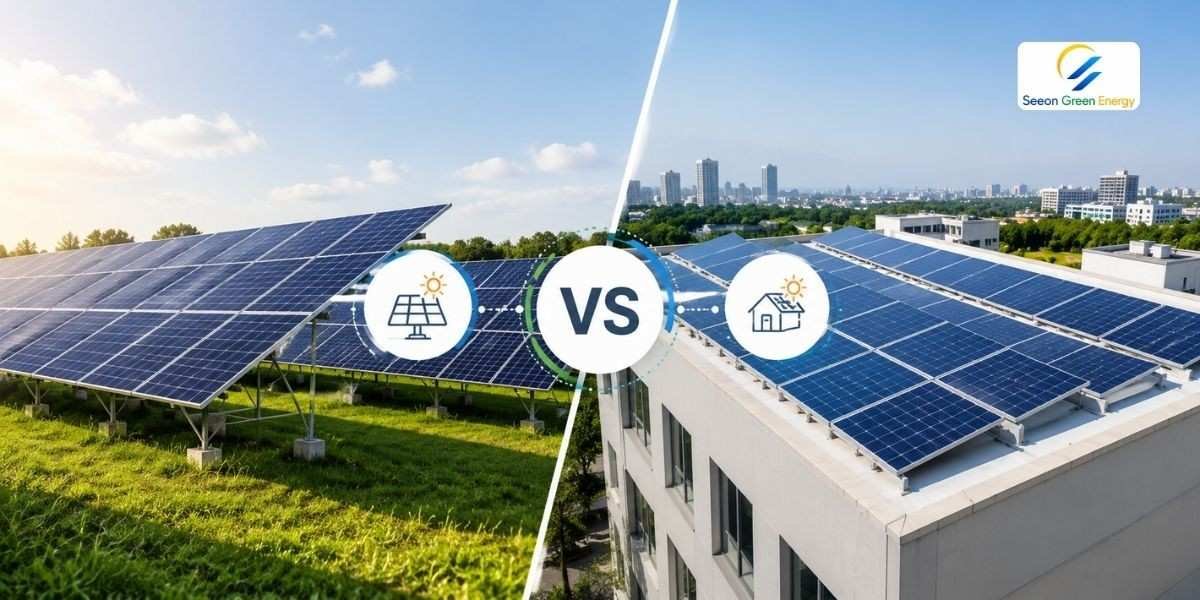
Ground-Mounted vs Rooftop Solar: Which Is the Smarter Investment in 2026?
Solar energy is no longer just an alternative power source; it has become a practical investment for homes, businesses, and industries looking for cleaner and more affordable electricity. However, choosing the right solar setup can feel confusing because every property has different requirements. The biggest question many people ask today is: Ground-Mounted vs Rooftop Solar — which option delivers better value in 2026?
Whether you are planning a ground-mount solar installation in Delhi or exploring rooftop options, understanding the difference between these two systems can help you make a smarter energy decision. Companies like Seeon Green Energy Pvt. Ltd. help customers evaluate their property conditions, energy needs, and budget before selecting suitable solar energy systems.
Both ground-mounted solar panels and rooftop solar panels can generate clean electricity, but their efficiency, installation process, maintenance requirements, and overall benefits vary significantly. Let’s compare both options in detail.
Understanding Ground-Mounted Solar and Rooftop Solar Systems
Before comparing both options, it is important to understand how these solar systems work.
A solar power system uses photovoltaic panels to convert sunlight into electricity. The panels generate direct current (DC), which an inverter converts into usable alternating current (AC) for homes or businesses.
The main difference between ground-mounted and rooftop solar is the location where the panels are installed.
Rooftop solar systems are installed on existing building roofs.
Ground-mounted solar systems are installed on open land using specially designed mounting structures.
Both systems provide reliable power generation, but the ideal choice depends on available space, electricity consumption, budget, and future expansion plans.
What Are Ground-Mounted Solar Panels?
Ground-mounted solar panels are solar arrays installed on the ground instead of a building structure. These systems require open land where panels can receive maximum sunlight without major shading issues.
Ground-mounted systems are commonly used for:
Large residential properties
Commercial projects
Industrial facilities
Solar farms
One major advantage of ground-mounted solar is installation flexibility. Since the panels are not restricted by roof size or structure, installers can adjust the panel angle and direction to improve solar panel performance.
For businesses and large energy consumers, ground-mounted systems can become a cost-effective solar solution because they allow higher capacity installation.
A professional Ground Mount Solar Installation in Delhi requires proper land assessment, structural planning, and technical design to ensure safety and maximum energy generation.
What Are Rooftop Solar Panels?
Rooftop solar panels are installed on residential, commercial, or industrial building roofs. They are one of the most popular solar installation options because they use existing unused roof space.
Rooftop solar is suitable for:
Homes
Offices
Schools
Small businesses
Commercial buildings
The biggest advantage of rooftop solar is that it does not require additional land. Property owners can produce electricity using their available roof area while reducing dependence on traditional electricity sources.
A properly designed rooftop system can help achieve reduced electricity bills and improve energy efficiency. However, roof condition, orientation, available sunlight, and structural strength play an important role in determining performance.
Many customers looking for Solar Rooftop Installation in Delhi prefer this option because it combines energy savings with efficient use of existing space.
Ground-Mounted vs Rooftop Solar: Complete Solar Panel Comparison
Choosing between ground-mounted and rooftop solar requires a detailed solar panel comparison. Both systems have advantages depending on the installation environment.
1. Space Requirement
Space availability is one of the biggest deciding factors.
Ground-mounted solar requires open land. This makes it suitable for properties with unused areas where larger solar arrays can be installed.
Rooftop solar uses existing roof space, making it ideal for urban areas where land availability is limited.
For cities like Delhi and nearby regions, rooftop systems are often practical because land prices are high and available space is limited.
2. Solar Panel Efficiency and Performance
Solar panel efficiency depends on several factors, including sunlight exposure, panel quality, temperature, shading, and installation angle.
Ground-mounted solar systems often have an advantage because installers can optimize panel positioning more easily. They can adjust the tilt and direction according to sunlight patterns.
Rooftop solar performance depends heavily on roof design. A roof with proper sunlight exposure can deliver excellent results, while shaded or poorly positioned roofs may reduce output.
Both systems can provide strong solar panel performance when designed correctly by experienced professionals.
3. Installation Cost Comparison
Solar installation cost varies based on system size, equipment quality, location, structure requirements, and installation complexity.
Rooftop solar generally avoids land-related expenses, making it attractive for homeowners and small businesses.
Ground-mounted systems may require additional costs for land preparation, mounting structures, and civil work. However, they can provide better scalability for larger projects.
A proper solar system cost comparison should consider not only initial expenses but also long-term savings, electricity generation capacity, and maintenance needs.
Maintenance and Long-Term Benefits
Maintenance plays an important role in the overall success of any solar investment.
Rooftop solar systems may require additional safety measures during cleaning and inspection because panels are installed at height.
Ground-mounted solar panels are usually easier to access, making cleaning and maintenance simpler.
Regular cleaning, monitoring, and professional inspections help maintain system efficiency.
A well-planned solar installation can provide long-term savings and support energy independence for many years.
Which Solar System Is Better for Different Users?
There is no single answer that works for everyone. The right choice depends on individual requirements.
For Homeowners
Rooftop solar is usually the preferred option because it uses existing roof space and helps reduce monthly electricity expenses.
Homeowners searching for Solar Companies in Delhi NCR should evaluate companies based on technical expertise, product quality, and after-installation support.
For Businesses and Industries
Commercial users with high electricity consumption may benefit from ground-mounted systems because they can install larger capacity projects.
Ground-mounted solar provides flexibility for businesses that need scalable solar power solutions.
For Large Properties
Properties with unused land can consider ground-mounted systems because they allow better customization and future expansion.
Why Solar Investment Is Becoming Smarter in 2026
The demand for renewable energy continues to grow because electricity costs, environmental concerns, and energy security have become important factors for consumers.
Solar technology improvements are making systems more efficient, reliable, and affordable.
Investing in solar supports:
Energy independence
Lower electricity dependency
Sustainable investment opportunities
An eco-friendly energy choice
Future-ready solar technology
Leading companies such as Adani Solar and Tata Power Solar Systems have contributed to the growth of India's solar ecosystem through advanced solar solutions.
Choosing the Right Solar Partner Matters
Selecting the correct solar installer is just as important as choosing between ground-mounted and rooftop systems.
A professional solar company helps with:
Site evaluation
System design
Equipment selection
Installation quality
Performance monitoring
Seeon Green Energy Pvt. Ltd. focuses on providing reliable solar solutions by helping customers choose systems according to their energy requirements and property conditions.
Whether you need rooftop installation or a larger ground-based project, working with experienced professionals ensures better performance and long-term reliability.
A trusted provider can guide you through the complete process, from planning to installation.
Final Verdict: Ground-Mounted vs Rooftop Solar — Which Is Better?
Choosing between rooftop and ground-mounted solar depends on your property, how much electricity you use, and what you plan for the future. There's no one-size-fits-all solution.
If you have a house, office or building with a roof, rooftop solar is a smart way to make your own electricity without needing extra land. For businesses, industries or properties with space, ground-mounted solar gives you more room to grow.
Both systems work well if they're designed and installed correctly. The right choice for you depends on how much energy you use in the space you have in your budget, and what you want in the long run.
Solar energy in 2026 is not about saving on your electricity bills. It's about taking control of your energy needs and making a choice for a cleaner future.
If you're still unsure which solar system is right for you talk to Seeon Green Energy Pvt. Ltd. Their experts will understand what you need check your site and guide you to a solution that works for you.
Get in touch with Seeon Green Energy Pvt. Ltd. Today. Start using smarter, cleaner and more reliable energy.